There are no yellow ribbons now, at least none for the little boy most of us never met. They’ve been gone for years, faded and forgotten and frayed by a generation of weather.
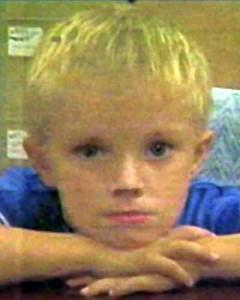
Tristen “Buddy” Myers was four years old, a bright-eyed, towheaded little boy with lots of energy and more than his share of challenges. He loved his dogs, his Great Aunt Donna and Great Uncle John, football and big trucks like John drove. He loved his neighbor’s horses, too, so much that there was a trail worn between Donna’s house and the horse barn.

Late in the afternoon on Oct. 5, 2000, Donna was tired. Buddy was tired too, having enjoyed a full day of everything that little boys do. When he went to sleep playing on the living room floor, Donna nodded off as well.
When she awoke, Buddy was gone.
She checked the house and yard. She checked the horse barn. She checked the vehicles. She called neighbors and friends. She called 911.
The search grew slowly, then it exploded as pagers and radios went off in the pockets and on the belts of volunteer firefighters, law enforcement and other folks. Somehow it was after dark before I heard anything about the search; we had gone to bed when my editor called and said I needed to be on the scene “15 minutes ago.”
Miss Rhonda and I took my father’s Oldsmobile, and the big car roared through the night at a speed that left the legal limit as a poor suggestion. Microwave Tower Road was comparatively long and not well-populated back then, and I remember wondering aloud how we would find the address.
We needn’t have worried.
Clouds of dust rose through the night, speared by flashlights and Q-beams and spotlights on trucks and fire apparatus. Sometimes the lights shone into the night sky. People who hadn’t gotten the word were yelling the name “Bobby! Bobby!” because not everyone knew he was called Buddy.
Buddy couldn’t seem to get a fair shake in life. His mom was young and made some bad choices, so Buddy went to live with his grandmother. Then his grandmother was diagnosed with a serious illness and couldn’t take care of him anymore. She called her sister, so Donna and John — who were looking forward to retirement – instead became parents of a little boy.
Donna’s home was a perfect world for a perfect little boy.
He had a wide, safe, green yard to play. His dogs and Donna never let him out of their sight. There was good, healthy food. The house sat at the crest of a hill on Microwave Tower Road, so there was very little traffic, and what there was heading that way could be seen coming a long way off. He could visit the neighbor’s horses. Donna and John got him the medical care he needed, and he had a safe, clean home with toys and his dogs and people who loved him.
Then he disappeared.
Little kids don’t disappear. They hide, they fall asleep in strange corners, they wander, sometimes they get lost – but they don’t disappear. They don’t just vanish. They go somewhere, voluntarily, accidentally or otherwise.
But Buddy disappeared.
For three days, we – and yes, that includes members of the media – searched for Buddy. Native American mantrackers found footprints that matched his size. Someone found a favorite dinosaur toy along one of the trails. The Highway Patrol helicopter found every deer in the area, along with several hounds. A firefighter found dog tracks, including those of a three-legged dog like one of Buddy’s pets. I walked the trails as did my photographer and a couple other reporters, ostensibly for the story, but we were hunting, too. Civilians directed traffic so deputies could get in the woods and help search.
Hunters used their vehicles and local knowledge to haul people from a dozen states through Carolina bays, swamps and deep woods. Churches brought boxes and boxes of food and hot meals. The closed Ford dealership became a command center, where coffee, food, and water were available 24 hours a day. A tent city sprung up behind the building. I interviewed tired trackers from West Virginia, Kentucky, Missouri, and elsewhere.
I met Monica Caison on the second day of the search. I had but briefly met Miss Donna, and Monica was sitting with her at the command post. Monica was fussing something hard at the chief deputy, who was a lifelong family friend and something of a hero of mine. As he always did with upset citizens, he let her vent. It bugged me a little.
I was to discover that the woman chewing on my hero was a heroine in her own right.
The Community United Effort for Missing Persons, better known as CUE, was a tiny non-profit back then, advocating for and helping the families of the missing. It’s much larger now, and Monica gets called all over the country. She now has a staff of volunteers and people with tracking dogs, drones, computer skills and vehicles; her people turn out like a small army when someone is missing and CUE is asked to help. She’s been on national television a few times; you can see her on the state and local channels right regularly.
But back then, there was just a loud, brassy woman named Monica and a few others who had skills but no resources, and a fanatical determination to never let anyone forget that every missing person was somebody’s child.
More than anything else, Monica helps families; sometimes there are happy endings, but other times it’s more a matter of closure. I have worked with her just a little on several other cases and had enough of a taste of what she deals with by the plateful. I can’t imagine the voices she hears in her sleep. She’s a stronger person than I am, is all I can say.
On that beautiful October afternoon in 2000, she was helping a family, although if one lacked context you might have thought otherwise.
The search continued for Buddy for three days; a storm was blowing in off the coast, and my friend the chief deputy sadly called everyone together. There were a couple hundred people gathered in the service bay of the car dealer. They were all tired.
Temperatures were plummeting, rain was moving in, and with it the possibility of severe weather. There was officially very little hope that Buddy was still alive. The search was being scaled back to a recovery mission.
There were tears, curses, groans and a few prayers in that cavernous room. Within a few hours, most of them had packed up and hit the road, trying to outrun the storm. One stalwart stayed for another few days, sleeping in a tent as 30 mile per hour winds drove a cold rain that wiped away any possible remaining signs of a little boy who disappeared. Eventually he, too, went home.
The yellow ribbons turned up on the second day of the search; soon they were everywhere. Utility poles, the doors of businesses, mailboxes, road signs. The ubiquitous missing child posters went up as well. The crazies turned out, the necromancers and psychics and green-and-purple haired Ouija board enthusiasts.
But there was nothing.
My mother happened to be covering a press conference at Donna’s house the day Buddy’s dogs loped up the driveway; both looked, smelled and felt clean. They weren’t particularly hungry, either. Where the three-legged mutt and the Doberman had been for four days was yet another mystery that remained unsolved.
Over the years there were a few false sightings, rumors and conspiracies and plots worthy of any true crime program.
But there was no sign of a little boy.
The yellow ribbons are all gone now; there are no more missing child posters for a boy who would not be a full-grown man. There are only unopened Christmas presents and unanswered questions, about a little boy who, like so many other people, somehow disappeared – even though little kids don’t just disappear.
- If you have any information about Buddy Myers or any missing persons case, contact your local law enforcement agency or the CUE Center at 910.343.1131.