
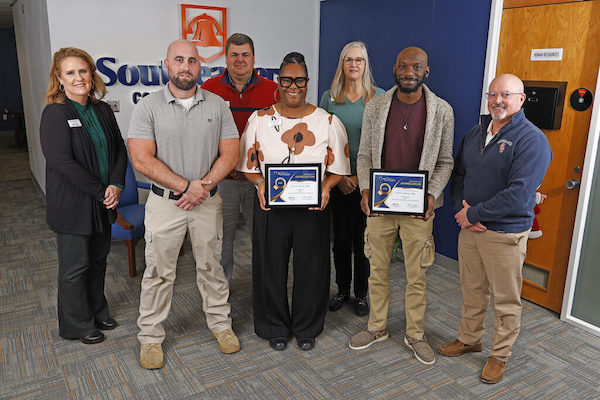

Southeastern Community College has been recognized for helping prison inmates prepare for life outside.
After more than doubling its High School Equivalency Test pass rate in 2025 over the previous year, SCC was awarded a certificate of appreciation for completing the N.C. Dept. of Adult Correction’s Vocational Challenge. Offenders held at Tabor Correctional Institution and Columbus Correctional Institution earned their high school equivalency diploma through the Transitional Studies and Prison Education programs at SCC.
On Oct. 23, SCC hosted a N.C. Prison Education Symposium in the SCC auditorium. Transitional Studies Recruiter/HSE Examiner Larry Everette and Education Facilitator Raymond Long accepted the certificate of appreciation at the symposium on behalf of SCC.
After accepting the award, Everette said this recognition “shines a light” on students who are concealed and confined but are making attempts at furthering their education. He said that earning a high school equivalency diploma helps prepare the offenders for life outside of prison. He explained that both Tabor Correctional and Columbus Correctional both obtained their pass rate goal set forth by the vocational challenge.
“A mind is a terrible thing to waste,” Everette said. “Within those prison walls, all they have is time on their hands. Having Transitional Studies and the entire Prison Education system helping prepare these offenders to be model citizens once they are released, this is a win-win situation for everyone.”
A sense of accomplishment and wanting to do better for their spouse, children or parents makes up the majority of reasons for completing the HiSET, Long added. He emphasized the importance of the instructors at Tabor Correctional and Columbus Correctional and their dedication to helping the offenders.
“It takes courage to do what they do,” Long said. “None of the offenders would be successful without those instructors.”
Transitional Studies Director Veronica Powell said that competing in this challenge and meeting the pass rate goal was a morale boost for the offenders. She explained that for some offenders in these classes, it is the only time they get to see and interact with other people.
“Some of those behind the prison walls are discouraged because of their outlook on life and where they are,” Powell said. “For participating in our program and earning their diploma, they get time deducted from their prison sentences. Once these offenders are released, this diploma makes them more marketable in finding a job.”
Powell recalled a graduation ceremony at Tabor Correctional, where an offender was so happy to see his mom there and watch him get his high school equivalency diploma. She said those instances where offenders are trying to show improvement and make strides towards a better future make her department’s work worth doing.
Powell also commended the dedicated instructors working at the prisons. She said her instructors “truly care” about the offenders and making sure they pass their HiSET.