
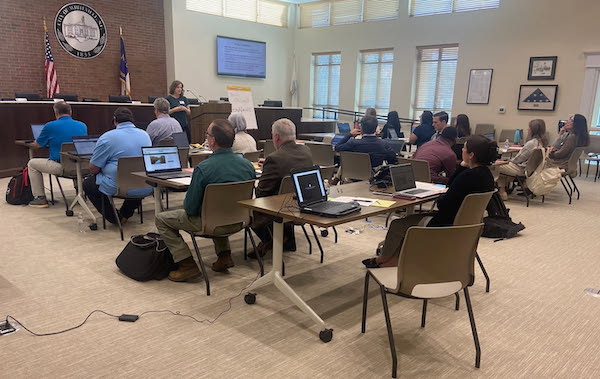

State and local officials met in Whiteville Wednesday to discuss strategies to combat flooding across the area.
The N.C. Department of Environmental Quality is developing the state Flood Resiliency Blueprint, which will form the backbone of a state flood planning process to improve response and recovery to flooding.
The DEQ website says the blueprint “is a first-of-its-kind program in North Carolina and represents the largest statewide flood mitigation investment in state history.”
The Flood Resiliency Blueprint is funded through a $20 million allocation to the DEQ Division of Mitigation Services from the General Assembly. An additional $96 million is allocated to the Division of Mitigation Services to fund priority projects identified in the development of the Flood Resiliency Blueprint the Neuse, Cape Fear, French Broad, Tar-Pamlico, White Oak, and Lumber river basins.
When it is complete, the blueprint will allow local officials can use online resources to help drive state, regional and community decision-making, and guide the legislature in making funding decisions.
When it is finished, DEQ said, the blueprint will better define projects and funding strategies that state and other government entities can implement to reduce flooding, mitigate flooding impact, and increase affected communities’ ability to maintain and quickly resume pre-storm activities following flooding.
Working with local stakeholders, interagency partners, academics, and technical experts, DEQ’s Division of Mitigation Services plans a comprehensive approach to identify problems, address barriers, and prioritize solutions.
Whiteville hosted this week’s meeting, which included state leaders as well as officials from neighboring towns and counties.