
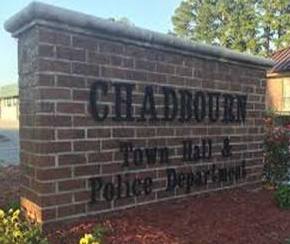

An advocacy group for law enforcement is questioning if Chadbourn Council members have attempted to influence police investigations.
The N.C. Police Benevolent Association provides legal and professional assistance to law enforcement agencies across the state.
It was unclear whether the letters are related to Saturday’s emergency called meeting by the council. The meeting was called by Mayor Pro Tem Tony Jordan, without consulting the mayor or town manager. The purpose of the meeting is to discuss personnel issues in closed session. The town failed to give legally required notice for a special called meeting, and it is unknown what personnel issues are urgent enough to set aside public notice rules about the meeting.
None of the town council members who responded to an email from CCN had any knowledge of the meeting or the reported emergency until Wednesday night. Council members Rashad Roberts and Coleen Faulk have publicly stated they will not be at Saturday’s meeting. Mayor Phillip Britt, Jordan and councilmembers Danny Clewis and Avila Nealy.
Sources close to town hall said the meeting was called in an attempt to fire Police Chief Ken Elliot, who is running for sheriff. Jordan’s wife Lakisha is employed by Sheriff Bill Rogers. Mayor Britt is also an employee of the sheriff’s office. (See related story)
Clewis said Thursday he supports the police department, but would not comment of Elliot. He said he did not know about the meeting until he received a notice from town town. Sources close to the town note Clewis has complained about the police department targeting him. Former Chief Harry White dropped an investigation into accusations that Clewis was soliciting prostitution after the reporting officer left the department, eight days after the report was filed against Clewis. Clewis denied that he had ever gone to police department to influence officers.
PBA Representative Brandon McGaha emailed the town manager and mayor on Feb. 3 with concerns that “some town council members may be contacting town police employees outside the statutory provisions” of a council/manager form of government.
“It also appears that some town council members are attempting to use town employees for political purposes,” the Feb. 3 email continues, in violation of State and Federal law (sic).
“When these council members are dissatisfied employee participation, they advocate against them.”
Under a manager/council form of government, the elected board creates policies which are then put into place by the town manager, in Chadbourn’s case Jason Robinson. Council members are specifically prohibited from supervising, hiring or firing of town employees other than the manager, town attorney and fire chief. The town’s charter from 1990 specifies the chain of command for the town.
On Feb. 19, McGaha again contacted the town, after a council member filed a complaint against the police department, then had her personal attorney contact the internal affairs investigator.
“We have had another concerning situation between a town council member and the police department,” the letter reads.
The council member who filed the complaint was not identified in the letter. The name was not available since the investigation is considered active.
McGaha said in the letter that a member of the board reported “misconduct” by a police department employee. Per town policy, Elliot initiated an internal investigation.
When the investigating officer contacted the council member for a statement, the letter said, the member refused to make a direct statement and had a private attorney respond to the investigator.
“The attorney was degrading and urged the officer,” the letter said.
“We found it odd that a council member would make an internal complaint and then refuse to cooperate,” the letter said.
McGaha notes that there are “several reasonable explanations the council member could have given. For example, complainants may have wanted to remain anonymous.
“Having a private attorney call the investigator in a non-criminal internal matter where the council member is the reporting person, and the attorney treating the officer the way he did, is unprofessional and may constitute a public official failing to perform their duties.
“It was reported to us that the attorney had the deportment that it was beneath the status of a council member to speak with the officer,” the letter said, even though the officer was investigating the council member’s complaint.
“It is very concerning that a council member would make allegations against a town employee with what seems to be no evidence or explanation to support them,” the letter said. “It appears that certain council members want to treat the police department with far less respect than it deserves.”
In an email to Mayor Phillip Britt, Councilmember Nealy responded to the PBA letters. She wrote that she had “no knowledge of actions outside the authority granted under the Council/Manager form of government” and could not speak about the behavior of other board members.
She countered that the PBA letters presented “allegations…without substantiation” which “are difficult to address and do not allow for an informed response.
“If the Association believes violations of law have occurred, submission of verifiable information through proper legal or administrative channels would enable appropriate review.
The PBA said in its letter that representatives plan to attend the March 3 town council meeting to discuss the issue.
The board is expected to go into closed session immediately after convening tomorrow (Saturday).