


Spring is a busy time of year for N.C. Wildlife Resources Commission (NCWRC) biologists. Warmer weather brings wildlife out from winter slumber.
Spring is when many species are on the move looking for mates and securing territories for the breeding season. Wild parents are busy building temporary nests or dens and securing enough food to support newborn young.
“This is the time of year people begin to call us about a wildlife encounter they’ve had; the weather’s nice, so both people and wildlife are out and about,” said Extension Biologist Falyn Owens.
From late summer through early spring, the N.C. Wildlife Helpline receives 100 to 300 calls per month. That spikes up to 700+ calls beginning in March through July. The species that receive the most calls are deer, followed by bear, birds, raccoons and fox.
NCWRC provides helpful guidance for people when encountering wildlife during this active time of year.
Black bears: Be proactive now by locking up human-provided foods, like garbage, birdseed, and pet food. Ensure livestock is properly secured with electric fencing. Acting now can ensure people and bears can better coexist in your community throughout the year.
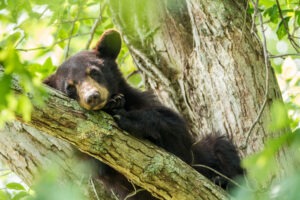
Do not feed or provide medication to bears showing hair loss; it can harm them and may be illegal. In the spring and summer bears shed their thick winter coat and their fur may appear thin or patchy for a time. This is a natural cycle and not a sign of mange or other health concerns. Contact the N.C. Wildlife Helpline (866.318.2401) with any concerns about wild animals.
Lone cubs: people may come across cubs that are alone––most likely waiting for their mothers to return from foraging. Never handle, feed or move a cub that’s suspected of being orphaned as this puts people and the cub at risk. Instead, note the location and contact the N.C. Wildlife Helpline (866.318.2401) or the appropriate district wildlife biologist.
For information about living responsibly with black bears, visit BearWise®.
Snakes There are many ways to coexist with snakes. They start becoming active when temperatures reach 60°F and above. NCWRC advises to stay calm and give a snake plenty of space to move on its way and avoid killing snakes. They play a vital role keeping rodent, slug and pest insect populations in check.
In fact, 10 of North Carolina’s 38 native snake species are endangered, threatened or of special concern. Please report rattlesnake or Northern pine snake sightings to HerpMapper.org or by emailing a photo, GPS coordinates, date and time of the observation to rattlesnake@ncwildlife.gov or through the pine snake reporting tool.
Raccoons are increasingly more common for humans to encounter, even during the daytime as they are losing their nature fear of people and the abundance of food for the taking. Visiting Coexisting with Raccoons to learn more including non-lethal options and trapping information.
Coyote sightings begin to rise in spring, peaking around May as they search for food to support hungry newborn pups. While coyotes are rarely aggressive toward people, they are opportunistic hunters, so smaller pets should be closely supervised when outdoors, especially around dawn and dusk. Tips to protect pets include:
- Remove outdoor food such as pet food, fallen fruit, food waste and bird feeders.

Coyote sightings are more common in late spring, as adults range farther afield foraging for food for puppies. (File) - Haze coyotes away (yell, spray with a water hose) from homes and businesses to keep them wary of humans.
- Install fencing at least six feet tall and prevents digging underneath.
Coyotes build dens in brushy or wooded areas to protect their pups. A den may be nearby if a coyote is seen staring at or following humans. NCWRC advises to calmly leave the area and inform others to avoid the location for a few weeks. As soon as the pups can survive outside of the den, the coyotes will no longer use the shelter.
Foxes give birth between late February and April. The pups (or “kits”) start exploring outside their den by late spring and early summer. Foxes are nocturnal, but it is not unusual to see them during the day, especially in spring and summer. They are shy and usually not aggressive but can lose their fear of people if they’re being fed.
Similar to coyotes, foxes are opportunistic and will take advantage of accessible pet food, garbage and small rodents that are attracted to bird feeders, (i.e., squirrels, mice). They are well adapted to living around people and thrive in neighborhoods.
- Springtime shedding – like many other furry species, foxes grow a new summer coat in spring, so seeing a fox with patchy fur or hair loss is not necessarily a health concern. Do not feed or provide any medication to foxes with hair loss, instead, report concerns to the NC Wildlife Helpline (866-318-2401).
- Nature’s rodent control – their appetite for mice and rats, and the occasional groundhog is a great benefit for homeowners and farmers.
- Relocation isn’t an option – In North Carolina, it is illegal to relocate foxes or other rabies vector species (e.g., raccoons and skunks) to prevent unintentional spread of disease to people or other wildlife. Removing these species from your property requires euthanizing the animal and a license or permit from the Commission.

If fox have made a den under your deck, raised porch or crawl space, consider these options to get it to move elsewhere:
- Place a bright spotlight or strobe light on the ground, pointed toward the den entrance.
- Play talk radio next to the den at high volume or frequently make loud noises in the immediate area.
- Install a motion-activated sprinkler near the den entrance or throw small objects in the adult foxes’ direction to assert that their presence won’t be tolerated.
Rabbits give birth to several litters throughout the spring and summer. People may see juvenile rabbits in plain sight, or newborn “kits” in shallow holes tucked among clumps of thick grass, under shrubs, or in the middle of open lawns. Rabbit nests often resemble a small patch of dead grass.
Female rabbits (or “does”) actively avoid their nests and visit only once or twice per day for a few minutes to avoid attracting predators. If a young rabbit is outside its nest and appears to be healthy and unharmed, leave it alone. The mother will usually return after humans leave the area.
If you believe a wild animal needs help, contact either the NC Wildlife Helpline or a licensed wildlife rehabilitator for advice before taking any other action.
Deer fawns are born in late spring and early summer. As newborns, they have spots and very little scent, which protects them from predators. Female deer, or “does,” leave their fawns alone for most of the day.
Never touch or move a fawn lying quietly by itself; its mother will expect to find it where she left it. If a fawn is bleating loudly, appears thin or injured, or has visible diarrhea, contact a licensed fawn rehabilitator for advice or contact the NC Wildlife helpline at 866.318.2401.

Fawns found within primary and secondary Chronic Wasting Disease surveillance areas cannot be rehabilitated or transported out of surveillance areas. This is to prevent the spread of CWD, a highly contagious and always fatal disease in deer.
The placement of bait, food or food products (other than bird feeders or for permitted purposes) to purposefully congregate wildlife is also not allowed from Jan. 2–Aug. 31 in primary and secondary surveillance areas to reduce the spread of CWD. Read more on the harms of feeding deer.
Songbirds nest throughout spring and early summer. Knowing the difference between a nestling and a fledgling bird can help determine if one actually needs help.
Nestlings are featherless and helpless––unable to survive outside their nest for long. They may be gently returned to the nest. If the entire nest has fallen, place it back in the tree or construct a makeshift nest. A small, sturdy cardboard box can be nailed to a tree with nesting material such as dryer lint, hair, pine straw, hay or leaves to act as an emergency nest.
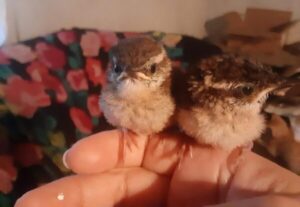
Fledglings have feathers and can walk, hop or fly short distances. They may look helpless but have left the nest and are learning to fly. Leave fledglings alone unless they are clearly injured or in immediate danger. In those less common cases, contact a licensed songbird rehabilitator.
Keeping cats indoors and dogs on a leash are great ways to help fledgling birds survive this vulnerable learning stage.
Hellbenders and Mudpuppies are most likely to be seen in spring, mainly due to more people (especially anglers) venturing into their habitat when hatchery-supported trout waters open in early April.
Mudpuppies and hellbenders are harmless to humans––neither poisonous, venomous, or otherwise toxic––although they may try to bite if someone picks them up. They are “bio-indicators” of good water quality as they are sensitive to pollution. If sighted, these large and unique salamanders should be left alone. Both species are listed as Species of Special Concern in N.C. Report sightings to Lori.Williams@ncwildlife.gov and include a physical location (GPS coordinates preferred) along with a photo or video if possible, or contact the NC Wildlife Helpline, 866-318-2401 to provide details of the observation.
It is a Class 1 misdemeanor with a fine and up to 120 days in jail for taking, possessing, transporting or selling mudpuppies or hellbenders. If anglers happen to catch one by hook and line, they should carefully remove the hook if possible or cut the line close to the hook and return the salamander back to the water. Learn more by visiting the NCWRC’s mudpuppy webpage and hellbender webpage.
Basic rules for any wildlife encounter:
- Never feed or handle a wild animal.
- Leave a young animal alone. Wild parents rarely abandon their young, even if they detect human scent.
- If unsure whether an animal needs help or have questions about wildlife removal:
- contact the NC Wildlife Helpline, Monday through Friday, 8 a.m. – 5 p.m., at 866.318.2401 or by email, HWI@ncwildlife.gov
- visit the agency’s frequently asked questions
- contact a licensed wildlife rehabilitator or wildlife control agent