
More documented heat-related injuries and illnesses have been recorded this year that in the past five years, and state officials warn it could get worse.
A dangerous heat wave is expected in North Carolina this Fourth of July Weekend. High temperatures will likely exceed 100 degrees and combined with humidity, could feel like 110 degrees. The N.C. Dept. of Health and Human Services is urging caution when spending time outdoors or in areas that are not air conditioned, and encourages people to drink plenty of water and be alert for signs of heat-related illness.
NCDHHS has already documented more than 1,808 emergency department visits for heat-related illness between May 1 to June 28, which is above the average of 1,363 heat-related illness emergency department visits in the same time period in 2021 to 2025.
“Heat-related illnesses can affect anyone, regardless of age or physical condition, so it’s important for everyone to stay alert when spending time outside over the holiday,” said Dr. Zack Moore, NCDHHS State Epidemiologist. “Recognizing the symptoms of heat illness early is key to preventing serious complications.”
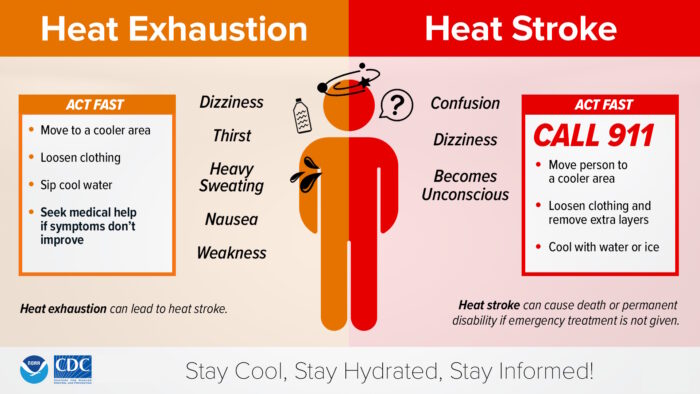
Signs and symptoms of heat exhaustion include dizziness, heavy sweating and nausea. If you are experiencing these symptoms, move to a cooler area, sip cool water, and seek medical help if symptoms do not improve. Heat exhaustion can lead to heat stroke, which is a medical emergency.
Symptoms of heat stroke can include confusion, slurred speech and loss of consciousness. If you or someone you know is showing signs of heat stroke, call 911 immediately, move to a cooler area, loosen clothing and remove extra layers, and use water, ice and cold, wet towels to cool the entire body.
To help prevent heat-related illness, the NCDHHS Heat Health Alert System sends out heat alerts when the forecast is projected to reach unhealthy levels. From May 1 to June 29 of this year, more than 692 county-level alerts were distributed in English and Spanish across the state. Visit the NCDHHS Climate and Health webpage to sign up for heat alerts.
NCDHHS also recommends the following tips to stay safe in hot weather:
- Stay hydrated: Drink plenty of water throughout the day and don’t wait until you’re thirsty to drink. Avoid or reduce alcohol and caffeine intake.
- Limit time outside: Avoid outdoor activity during the hottest parts of the day if possible. Wear light, loose clothing and take frequent breaks in shade or air conditioning.
- Seek air conditioning: If you don’t have air conditioning and it’s hotter than 95 degrees, go to a public building where it’s cooler.
- Look out for others: Check in on family, friends and coworkers to make sure they are hydrating and staying cool.
- Stay informed: Sign up for NCDHHS heat alerts and stay updated on local weather forecasts so you can safely plan outdoor activities.