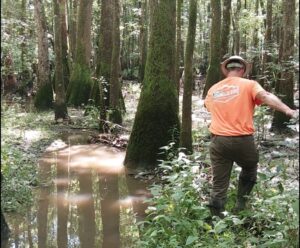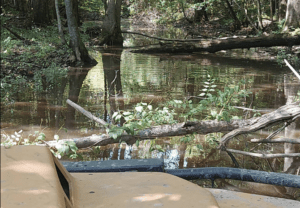
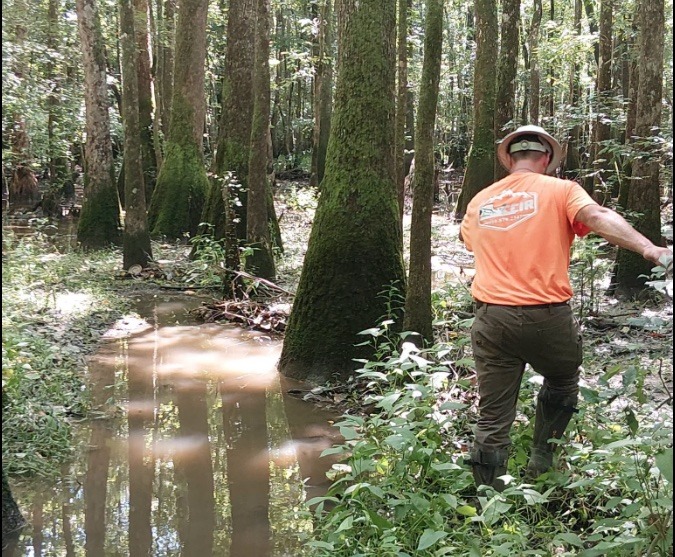
Possibly the only benefit to the ongoing drought is that clearing crews have better access to Soules Swamp through Whiteville, and teams are taking the opportunity to clear out beaver dams and blockages before another big rain event.
“We decided to take advantage of it being so dry and get ahead of the game for when we do have a storm,” said Hal Lowder, City Stormwater Manager.
The work is funded through the N.C. Dept. of Agriculture Streamflow Rehabilitation Assistance Program (StRAP) . The $38 million state-funded reimbursement initiative can be used to clear debris, stabilize banks, and restore drainage infrastructure in waterways to reduce flood risks. It is managed by the N.C. Soil and Water Conservation Commission.
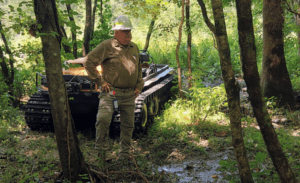
Lowder and Daniel Beard, a contractor with the StRAP grant, used an Argo offroad vehicle to navigate the swamp. The tracked amphibious vehicle can be driven like a boat, but most of the time the crew rode on almost-dry ground rather than in the water. They explored the west side of U.S. 701 Monday. Beard’s crew moved east on Tuesday.
“I don’t think I have seen it this dry before,” Lowder said. “We saw a lot of snakes, and some really big snapping turtles. I was surprised we didn’t see any alligators.”
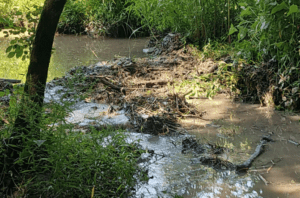
Workers recorded the locations of some blockages in the swamp, Lowder said, and knocked out several dams by hand. Some channels could be opened by actually driving the Argo through the dams. Lowder said water levels were dropped by a foot or more in some places.
Crews will return Wednesday with an excavator for heavier work, Lowder said.
“There are a couple of beaver dams to knock out, but not there’s not much actual beaver activity right now,” he said. “We’re trying to get ahead of them.
“There’s one dam about a hundred yards west of the Madison Street bridge that will come out. Plus a few farther downstream as well.” Beaver are usually less active during July and August, but they get back to work when young beaver begin leaving their families in September and setting up their own colonies.
“We saw one lodge that may be in use,” Lowder said. “The amazing thing was that at one of the dams they blew up last year, almost every stick that had been in that dam was put back into the new one.
“That just shows that you can’t eradicate them. You can manage the beavers, but there’s no way to get rid of them all. They’re hard-working animals.”
Lowder said the work is being paid for through leftover StRAP grant funds set aside for stormwater improvement. State regulators will inspect the work when Beard’s crews are finished. Debris will be moved in compliance with state and federal laws, Lowder said.
“We had the funds, and the water was down, so that means we could make more efficient use of the workers and equipment,” Lowder said. “The city is trying to get ahead in case we do have a serious stormwater event this fall.”
Lowder added that as troublesome as flooding is for the city, the swamp itself is “a beautiful place.
“We have an incredible natural resource here,” he said.
For video of the crews at work, click here to go to the City of Whiteville Facebook page.