
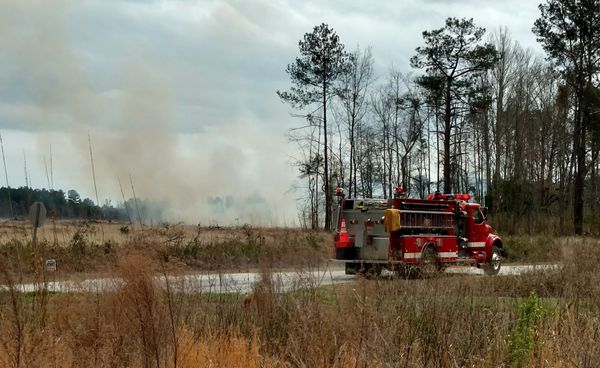
As fall wildfire season begins in North Carolina, the N.C. Forest Service is urging the public to take extra care with outdoor burning.
A suspected trash fire in Robeson County quickly bloomed to more than 150 acres earlier this week. Eight fire departments and the N.C. Forest Service were deployed. Two firefighters were airlifted to a hospital with serious injuries.
Wildfire activity typically increases from October through early December, when falling leaves, dry vegetation and changing weather conditions can allow fires to spread quickly. While recent rains have somewhat reduced the drought in the region, groundwater and moisture levels are still extremely low.
“Most wildfires in this state are preventable,” said Agriculture Commissioner Steve Troxler. “Human activity continues to be responsible for more than 99 percent of wildfires in North Carolina, making individual actions one of our most important tools for preventing wildfires. Before you burn, take simple steps to keep your backyard fire in your backyard.”
For safe burning practices to help prevent wildfire, the N.C. Forest Service offers the following guidance:
- Check for burn bans or fire restrictions in your area.
- Check the weather. Never burn on dry or windy days.
- Make sure you have a valid burn permit. You can obtain a burn permit at any N.C. Forest Service office or authorized permitting agent, or online.
- Clear the area you intend to burn. Remove leaves, pine needles and other flammable material from around your burn area.
- Keep your fire small, not tall.
- Remember, it is illegal to burn anything other than natural vegetation.
- Be sure you are fully prepared before burning. Keep tools, a water source and a cellphone nearby.
- Never use kerosene, gasoline, diesel fuel or other flammable liquids to speed up burning.
- Never leave your fire. Stay with it until it is completely out. If it’s too hot to touch, it’s too hot to leave.
- Drown, stir, drown, feel. Douse burning charcoal briquettes, campfires or burn piles thoroughly with water. Drown all embers, not just the red ones. When soaked, stir the coals and soak them again. Make sure everything is wet and that embers are cold to the touch. If you do not have water, mix enough dirt or sand with the embers to extinguish the fire, being careful not to bury the fire.
- Never dump hot ashes or coals into a wooded area.
“For communities still recovering from hurricanes, wildfire prevention remains especially important,” Troxler added. “Storm-damaged forests have additional fuel on the ground, making it even more critical to use caution when burning and to avoid activities that could spark a wildfire.”
Outdoor burning isn’t the only way a wildfire can start. Remember these prevention tips:
- Use extreme caution when handling machinery and equipment that can create sparks or heat.
- Properly secure trailer chains so they don’t drag and throw sparks.
- Discard cigarette butts, matches and other flammable materials in appropriate containers.
Use the N.C. Forest Service website to learn more about how to prepare for and prevent wildfires. If in doubt, contact your N.C. Forest Service county ranger’s office.