Note to my readers: Last week’s column was a promise I made to my father as he lay dying. This week’s column is a promise I made to myself that same day.
I was talking with a friend the other day when I gently corrected a misstatement he’d made. Our conversation had something to do with architectural styles. He questioned my correction, but when we looked it up, I was right. I didn’t gloat, since there was no reason to do so and gloating is rude.
“How did you know that?” my friend asked. I shrugged.
“My dad.”
Architectural trivia was just one thing my father left with me; we were at a social function once where the owner of the home was proudly proclaiming all the thises and thats of the home. He was especially boastful of the home’s age and how a minor historical character had stayed “in this very room” during the War Between the States.
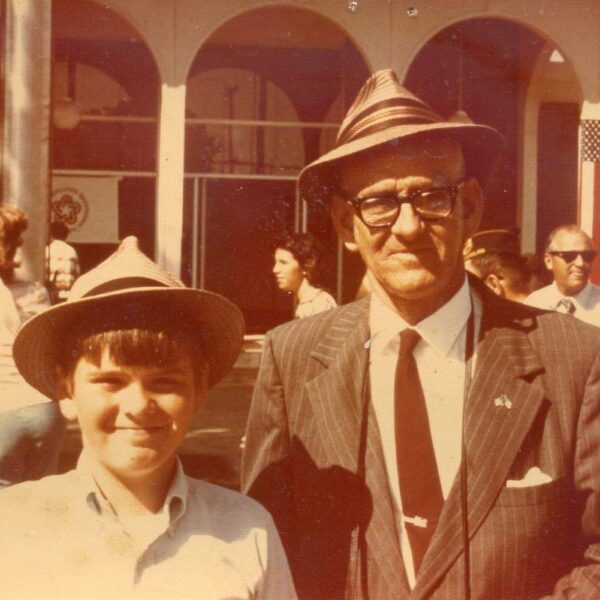
I saw Papa spending what seemed to me to be an inordinate amount of time looking at the ceiling on one side of a doorway, then the other. I asked him why (since I was a nosy little kid) and he just made a noncommittal noise. Later he explained that the owner of the home, as nice a fellow as he was, was wrong. He wasn’t ugly about it; he didn’t accuse the man of lying. Papa just said that the proud man wasn’t correct. He didn’t want to embarrass him publicly, either, so he didn’t say anything.
The ceilings of the two rooms told the truth. The trim, the hardware, even the height were different. Not only that, the person who was supposed to have stayed there wasn’t even in North Carolina when the momentous events were supposed to have occurred, in a room that didn’t exist at the time.
Papa let me help him pull out history books and references to prove his point. Years later, I got to know a new owner of the home, and he said he gently pointed out to anyone who asked about the legend that it was nothing but a story.
Papa sought the truth; even when he suspected he might not like the outcome, he sought the truth. One of the preachers at his funeral recounted seeing the Old Man purposefully walking up the street to the courthouse one day, too busy to visit. Papa told him he was sorry to be rude, but he was trying to confirm a particular rumor. He was looking for the truth.
My father had his generation’s sense of right and wrong: well-defined, immovable, but not delivered in a way designed to embarrass those being corrected. It wasn’t about being pridefully right; it was about gracefully helping others.
He was the product of the last generation of Victorians, getting his better qualities from his grandparents and some other traits from his ne’er-do-well uncles (who created some hilarious, sometimes ribald stories). His father survived World War I only to be killed by a trolley car in Washington, D.C. when Papa was a toddler. Grandmother remarried, and Papa loved his half-brother and half-sister, but he ended up being raised more by his grandparents.
Because of them he was both an historian (the Traylor side) and a hardware merchant (the Weaver side). He ate lunch with Charles Lindbergh in my great-grandfather’s office and learned to drink with my great-uncles. Along the way he played saxophone in a band that was often paid in Prohibition-era alcohol, sold hammers and saws by the case, axes by the dozen and nails by the hundred-weight, and almost ended up on a ship that ended up being sunk by the Japanese during their war with China, the prelude to World War II.
When that war came to America, Papa’s legs and feet wouldn’t let him serve, so he did everything else, serving on a draft board, running the family hardware business, and coaching then managing a minor league baseball team. If you closely watch Ken Burns’ documentary on baseball, you can see my old man shaking hands and saying goodbye to one of his players who made it to the Major Leagues, then went off to war. Papa, however, stayed behind.
Looking back now, it’s fair to say that Tom Weaver was often on the edge of things, but not in the spotlight. He liked it that way. He didn’t want to be famous. When one of the newspapers he worked for passed a policy that everyone had to submit work for state press association awards, he did as he was told. He won quite a few honors, too, but unlike most reporters who came and went, his awards were not framed on the wall of his office. They were in a desk drawer.
A picture he took of his friend Sen. Jesse Helms and then-presidential candidate Ronald Reagan was used by both campaigns, but Papa’s name wasn’t on it, except the one autographed by Uncle Jesse and President Reagan for him. He met quite a few notable characters through the decades, and was truly friends with several, sharing letters and the occasional phone call, methods of communication that seem quaint and utterly inconceivable today.
He didn’t push me out of the room when he met with some of those notables; I think some of it came from when he was a child and his grandfather hosted veterans meetings in his homes, where both Confederates and Yankees met not so much as former enemies, but as Americans concerned about the country and the world in the 1920s. He had to hide under the stairs or in the bushes outside the parlor to hear the adult conversations; therefore I think he wanted his youngest son to hear those things firsthand, to know the truth. As such I sometimes got to sit on his lap while he talked on the phone to politicians who appreciated or took issue with editorials he’d written. I didn’t realize until later what he was giving me.
Papa taught me about storytelling, both in conversation and words. He taught me that every single person has at least two significant stories in their lifetime, and they deserve to have those stories preserved.
There were so many other gifts he granted me as well; a love of the news trade, the South, our state and country. Balancing fairness and polite skepticism. The need to avoid a fight if at all possible, but to win the war if a fight was inevitable. An all-abiding understanding that God is in control, that He gave His son for our sins, and all other things are temporal, but God and salvation—or damnation – are eternal.
He taught me the love of dogs, good pocketknives, craftsmanship, and American V8 engines. Devotion to my wife, as he was devoted to my mother. He taught me about loyalty to family and close friends, even when you have to grit your teeth.
I learned the inviolable rules that a gentleman takes his hat off inside, opens the door for ladies and the elderly, listens to little kids and is willing to stand quietly in the breach when no one else will, if that’s what is right. He taught me that there is something beautiful about every single lady who tries to carry herself as a lady.
The Old Man was apt to quote Patrick Henry, George Washington, Thomas Jefferson, Shakespeare, some obscure Supreme Court Justices, Robert E. Lee, Stonewall Jackson or (to make a point) one of the lesser political lights his newspaper work prevented from becoming a state or national figure.
Papa wasn’t a big one for quoting scripture, although he read his Bible daily, likely even more than I do, I am ashamed to say. I like to think Papa at least partly lived by Philippians 4:8, which reads “… whatever is true, whatever is noble, whatever is right, whatever is pure, whatever is lovely, whatever is admirable—if anything is excellent or praiseworthy—think about such things.”
He taught me to try to find the good in people, but not to let it get in the way when they’d done something wrong. He knew there were evil people in the world, and likely would be even more when I “got grown,” as he put it. I doubt he had any idea exactly how much evil there would be, but he tried to ensure that his youngest son wouldn’t be afraid to call it out, even when others refused.
He taught me more things than I have space for in this column.
He didn’t teach me how not to wish for his guidance, how not miss the sound of his fingers punishing a manual typewriter or him grumbling at a computer, yelling at ballgame on television, or telling my mother she was beautiful. He didn’t teach me how not to miss him, even though in the next day or so, it will have been 25 years since we said goodbye.
Some things just can’t be taught, even by the best father.
That’s one truth I have learned the hard way.