
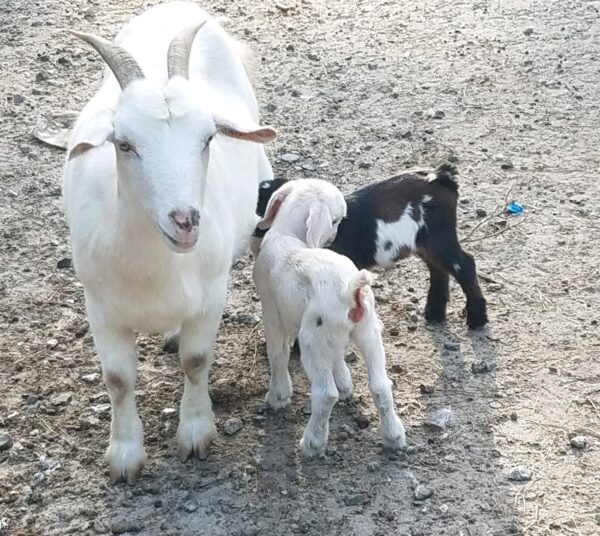
State health officials have confirmed that four baby goats in an Iredell County petting zoo had rabies.
The N.C. Dept. of Health and Human Services (DHHS) which monitors rabies in the state, announced late last week that the petting zoo visited multiple locations from July 28-Aug. 27, and dozens of people may have been exposed, including children and the elderly. The events took place in multiple western counties, but none in Southeastern North Carolina.
Owners of the event venues are being contacted, the DHHS said.
Rabies is a deadly disease that can spread from wild animals to pets and people, primarily through a bite, scratch or when infected saliva touches broken skin or mucous membranes. Human rabies infections are extremely rare in the United States. No human cases have been reported in North Carolina since 2011.
Rabies is almost always fatal in mammals, including people, unless medications to prevent infections are given before symptoms develop. Symptoms can begin weeks to months after exposure. Early symptoms are flu-like illness including weakness, fever or headache as well as a prickling or itching sensation where someone was bitten or exposed.
While state law requires dogs, cats and ferrets be vaccinated, livestock are not mandated rabies vaccines.
Columbus County has had no confirmed rabies cases so far this year, according to Animal Protective Services. No rabies cases have been reported in Columbus since 2020, according the DHHS data. Bladen County has confirmed one bat, one dog, two cats, one fox and 11 raccoons. Brunswick has reported one cat, five foxes and five raccoons in the same period.
Raccoons and bats are among the leading rabies vector species, since they tend to live in close quarters and easily infect family members.
Dawn and Ray Battle own Comfort Creek Farms on Red Hill Road near Whiteville. They frequently bring animals, especially goats, to events across the area, so people can learn more about livestock and farming in general. They frequently have 40 to 60 goats in their flocks, despite having reduced their herd in recent years.
“The most effective defense is to stay involved with your critters,” Mrs. Battle said. “Learn as much as you can about them and each of their personalities.”
She agreed that vaccinations would be the best preventative, but noted the logistical and financial problems with giving shots to large herds of animals.
“It is unreasonable and unfeasible to vaccinate an entire herd of cattle or goats, or a sounder of pigs just in case there might be an exposure,” she said. “Can you imagine?”
The Battles dealt with a rabid raccoon several years ago, she said. The coon never made it into their pasture but was near the farm. They shot and killed the raccoon and contacted Animal Protective Service. The coon came back positive for rabies.
A neighbor contacted the Battles about the raccoon, she said. There were no confirmed cases in the county at the time.
“It was obviously very sick, and in the advanced stages,” she said. I suppose that’s another bit of advice – watch out for each other.”
“We monitored our herd – at the time we had more than 40 goats – for unusual behavior just in case we missed the coon getting around them. Being familiar with them, we would have recognized if something was off. We also looked for physical signs of exposure such as bites, scratches, etc.
“It is important for us to be vigilant about the physical and behavioral changes in our animals,” she said. “You should keep an eye out for any unusual behavior in your herd, and any observations of wildlife that may interact with them.”
Mrs. Battle said she isn’t familiar with the petting zoo in question but has sympathy for them. “I don’t know the farm or the owners,” she said. “I feel terrible for all the people who now have to worry about exposure and treatment. And the animals that must be euthanized and tested. Many of them, people and animals, will not be sick but there is no choice about the matter.
“My heart hurts for the owners and the poor children and families. Terrible, terrible situation.”